
Pollinator Tapestry
Living Wall XXIII
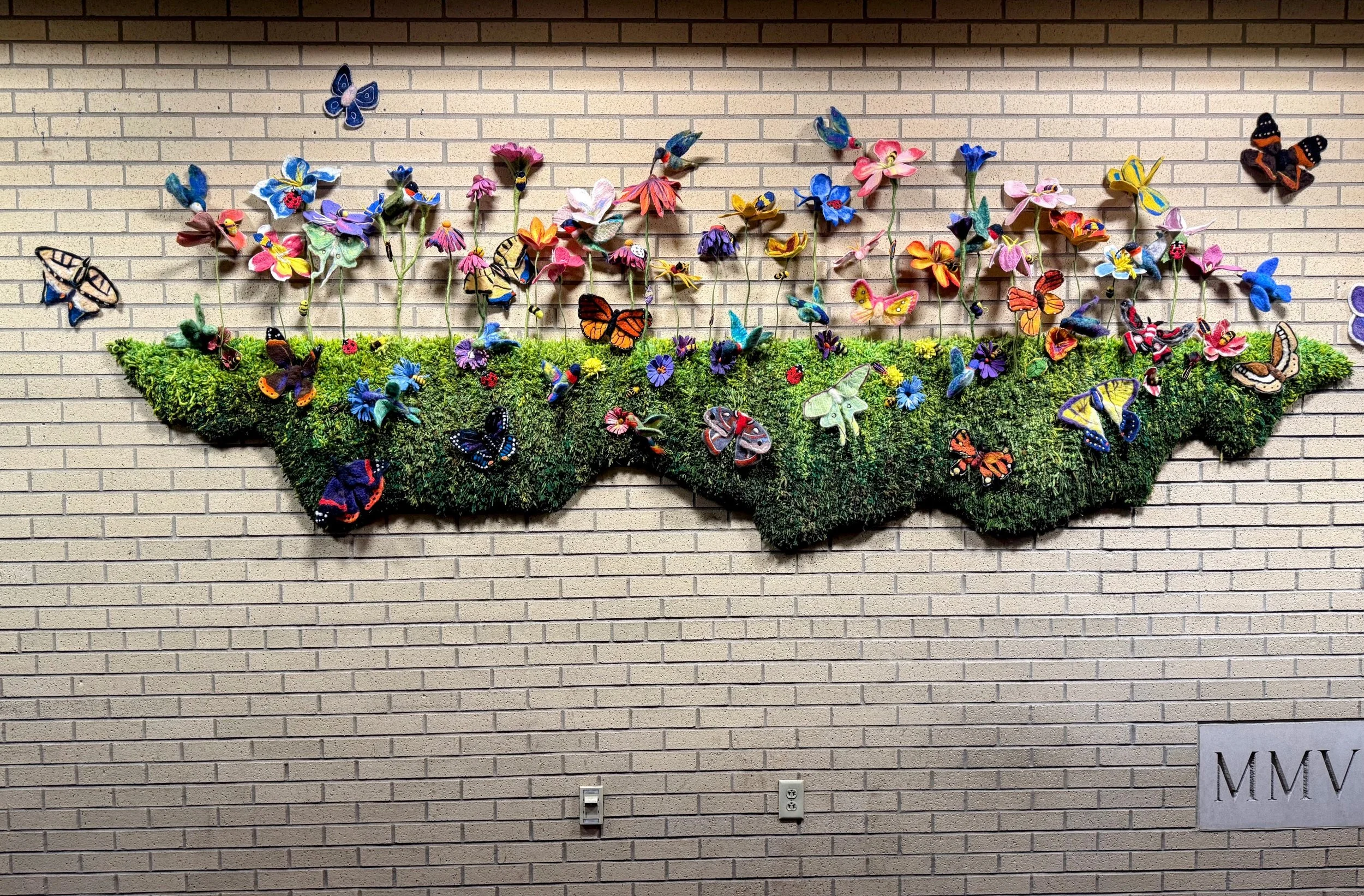
As much as it seems this pollinator garden has grown here overnight, this textile tapestry was created over months of work, harnessing the power of community, creativity and collective action to bring this tableau of natures’ never ending dance of symbiosis to life.
It started with a series of free workshops open to the public. Community members came on weekends and weeknights to learn how to wet felt, needle felt and embroider.
The flowers you see were made from a material called wool roving, un-spun wool fibers that have been cleaned, combed and dyed and that can be laid out into the shape of a flower. Then water and soap is applied to this wooly flower so the fibers can be agitated by hand. Microscopic scales on the wool fibers open when exposed to water and attach to each other when agitated. Through this process the loose wool fibers become entangled into a sculptural fabric, felt. Each flower was handmade through this process.
The moths and butterflies were an exercise in painting with wool through the art of needle felting. Using un-spun wool and a special tool called a felting needle, colorful fibers were arranged and shaped into the intricate patterned wings of local native moths and butterflies. The needle is repeatedly poked into the fibers to tangle them together and fuse them into a premade felt background, essentially applying wool fibers with a needle the way you might apply paint with a paintbrush.
The hummingbirds were also made through needle felting. This time focusing on how wool fibers can be sculpted with the needle through pre shaping the wool almost like clay and using the needle to attach and compact the fibers into the body of the bird and then using the needle to apply layers of colorful wool fibers to bring them to life.
The bees were made by our youngest participants, kindergarteners to 5th graders learned about needle and wet felting to create the variety of pollinator bees in our garden from bumble bees to sweat bees. One of my favorite bees was given the addition of a blueberry hat!
The beetles helping to pollinate our garden were made using embroidery techniques like satin stitch, split stitch and French knots. All applied onto a fabric that will dissolve when placed into water. This way the only thing that remains are the stitches, freeing the fireflies, lady bugs and June bugs form the textile traps, letting them crawl freely among the flowers.
Once all of these incredible pieces were finished and the final workshop finished, the work of building the garden began. I took all the student work back to my studio and began assembling the pieces. I started with the background. I used my rug tufting gun to create the 10 foot grass textile, using my hand dyed deadstock wool yarns in an effort to keep material out of landfills and turn them into art that celebrates our living planet.
Once the background was tufted and trimmed, it was time to attach everyone’s work. The flowers needed to be attached to wired stems wrapped in wool fibers so they could emerge from the grasses. The moths, butterflies, birds, bees and beetles all had to be composed and hand stitched into the rug, bringing the symphony of symbiosis and pollination to life.